Table of Contents
Introduction
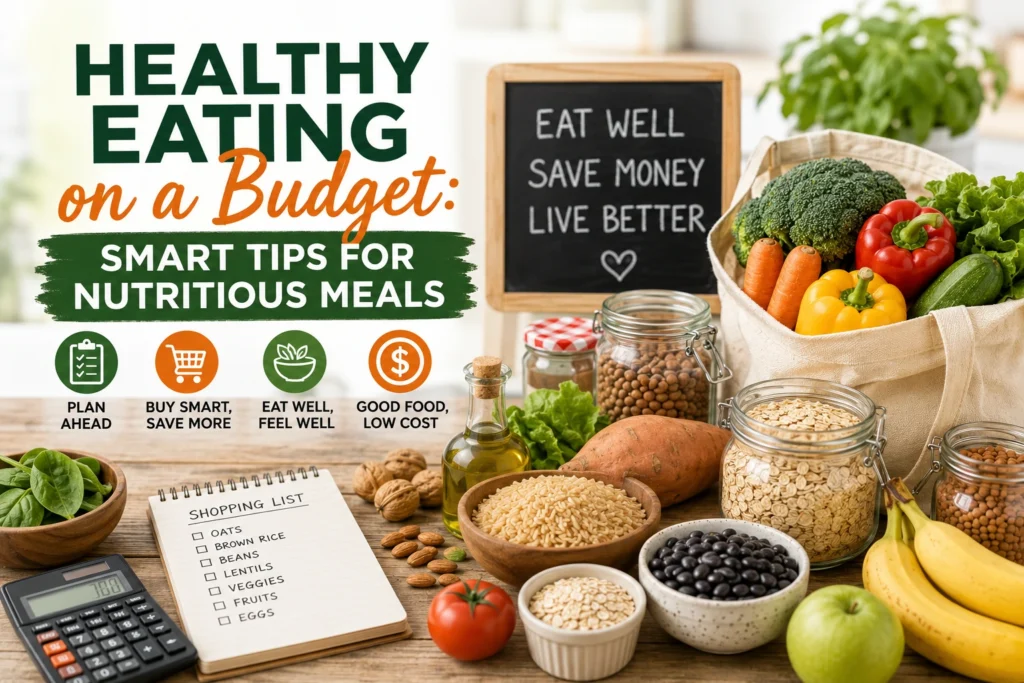
Healthy Eating on a Budget is easier than many people think. While nutritious food is often considered expensive, the truth is that smart planning, simple ingredients, and mindful shopping habits can help you enjoy healthy meals without stretching your grocery budget.
Many affordable pantry staples—including oats, beans, lentils, rice, eggs, frozen vegetables, and seasonal fruits—provide outstanding nutrition. By making informed choices, you can improve your health, reduce food waste, and save money at the same time.
This guide shares practical strategies, affordable food ideas, and meal-planning tips to help you build healthier eating habits while staying within your budget. (Healthy Eating on a Budget)
Why Healthy Eating on a Budget Matters
Eating nutritious foods supports every part of your body, from your immune system to your heart and digestive health. A balanced diet can help: (Healthy Eating on a Budget)
- Maintain a healthy weight
- Increase daily energy
- Improve concentration
- Strengthen immunity
- Support heart health
- Reduce the risk of chronic diseases
- Improve digestion
- Save money over time
Healthy eating doesn’t require expensive organic products or specialty foods. Simple whole foods often provide the best nutritional value.
Benefits of Healthy Eating on a Budget
Following a budget-friendly nutrition plan offers numerous advantages: (Healthy Eating on a Budget)
Save Money
Planning meals and shopping wisely reduce unnecessary spending.
Reduce Food Waste
Buying only what you need helps prevent spoiled food.
Improve Nutrition
Whole foods provide more vitamins, minerals, and fiber than processed foods.
Build Better Eating Habits
Cooking at home encourages healthier choices and portion control.
Reduce Stress
A planned grocery budget makes shopping easier and more predictable.
15 Smart Tips for Healthy Eating on a Budget
1. Plan Your Meals Every Week
Meal planning is one of the most effective ways to save money.
Create a weekly menu before grocery shopping and purchase only the ingredients you need.
Benefits include:
- Fewer impulse purchases
- Less food waste
- Better nutrition
- Easier cooking
2. Create a Grocery List
Never shop without a list.
A grocery list helps you stay focused and prevents unnecessary spending on processed snacks or convenience foods.
Stick to your list whenever possible.
3. Buy Seasonal Fruits and Vegetables
Seasonal produce is usually:
- Fresher
- More flavorful
- Less expensive
Visit local farmers’ markets for additional savings.
4. Purchase Frozen Produce
Frozen fruits and vegetables are often:
- Cheaper
- Available year-round
- Nutritionally comparable to fresh produce
They’re also less likely to spoil before you use them.
5. Buy Pantry Staples in Bulk
Bulk purchases often reduce the cost per serving.
Excellent bulk foods include:
- Brown rice
- Oats
- Lentils
- Beans
- Whole wheat pasta
- Quinoa
Store them properly to maximize shelf life.
6. Cook More Meals at Home
Restaurant meals usually cost far more than home-cooked food.
Preparing meals yourself allows you to:
- Control ingredients
- Reduce sodium and sugar
- Save significant money
Simple recipes often taste just as satisfying.
7. Choose Store Brands
Generic or store-brand products frequently offer identical nutritional value at lower prices.
Compare labels rather than packaging.
8. Eat More Plant-Based Proteins
Beans, lentils, chickpeas, and peas cost much less than meat while providing:
- Protein
- Fiber
- Iron
- Complex carbohydrates
They are perfect for soups, curries, salads, and stews.
9. Use Leftovers Creatively
Transform leftovers into new meals.
Examples include:
- Chicken into wraps
- Rice into fried rice
- Vegetables into soup
- Beans into tacos
This minimizes waste and stretches your grocery budget.
10. Prepare Meals in Advance
Meal prepping saves:
- Time
- Money
- Stress
Cook larger portions on weekends and refrigerate or freeze individual servings.
11. Limit Sugary Drinks
Soft drinks and specialty coffees add unnecessary expenses.
Choose:
- Water
- Herbal tea
- Homemade smoothies
- Infused water
Your wallet and your health will benefit.
12. Buy Whole Foods Instead of Processed Foods
Whole foods are often:
- More nutritious
- More filling
- Better value
Examples include:
- Fresh vegetables
- Whole grains
- Eggs
- Beans
- Fresh fruit
13. Compare Unit Prices
Don’t just compare package prices.
Look at the cost per ounce, kilogram, or liter to find the best value.
Sometimes larger packages offer significant savings.
14. Grow Simple Herbs at Home
Fresh herbs can be expensive.
Growing basil, parsley, mint, or cilantro in small pots provides fresh flavor at very little cost.
15. Avoid Shopping While Hungry
Shopping hungry often leads to impulse purchases.
Eat a healthy snack before grocery shopping to make smarter choices.
Budget-Friendly Foods to Always Keep at Home
Stock your pantry with affordable, nutritious staples such as:
- Brown rice
- Oats
- Lentils
- Canned beans
- Eggs
- Frozen vegetables
- Frozen berries
- Sweet potatoes
- Bananas
- Whole wheat pasta
- Greek yogurt
- Peanut butter
- Olive oil
- Canned tuna
- Seasonal vegetables
These foods can be mixed and matched to create dozens of healthy meals.
Sample One-Day Budget Meal Plan
Breakfast
Oatmeal topped with sliced banana and peanut butter.
Morning Snack
Greek yogurt with frozen berries.
Lunch
Brown rice, black beans, steamed broccoli, and carrots.
Afternoon Snack
Apple slices with peanut butter.
Dinner
Baked sweet potato, sautéed spinach, grilled eggs, and a side salad.
Evening Snack
A handful of roasted chickpeas.
This meal plan provides protein, fiber, healthy fats, vitamins, and minerals while remaining budget-friendly.
Common Budget Shopping Mistakes
Avoid these common mistakes:
- Shopping without a list
- Buying excessive processed snacks
- Ignoring frozen produce
- Throwing away leftovers
- Buying expensive convenience meals
- Purchasing trendy “health” products unnecessarily
- Shopping daily instead of weekly
Simple planning can prevent these costly habits.
Additional Tips for Long-Term Success
To make Healthy Eating on a Budget sustainable:
- Set a weekly grocery budget.
- Cook larger batches and freeze leftovers.
- Try one new healthy recipe each week.
- Use coupons and loyalty programs.
- Drink more water instead of sugary beverages.
- Keep healthy snacks readily available.
- Focus on whole foods instead of packaged products.
Small, consistent habits often lead to lasting improvements in both health and finances.
Final Thoughts
Healthy eating doesn’t require expensive ingredients or gourmet recipes. With thoughtful planning, smart grocery shopping, and simple cooking techniques, anyone can enjoy nutritious meals while staying within a budget.
Remember that healthy living is built on consistency rather than perfection. By incorporating affordable whole foods like oats, beans, rice, vegetables, eggs, and seasonal fruits into your routine, you can nourish your body, save money, and create lasting healthy habits.
Start with one or two of these strategies this week, and you’ll quickly discover that eating well can be both affordable and enjoyable.
Frequently Asked Questions (FAQ)
What is healthy eating on a budget?
Healthy eating on a budget means choosing nutritious foods while keeping grocery costs low through meal planning, smart shopping, and cooking at home.
What are the cheapest healthy foods?
Affordable healthy foods include oats, rice, beans, lentils, eggs, bananas, carrots, cabbage, frozen vegetables, and sweet potatoes.
How can I save money on groceries?
Plan meals, make a shopping list, buy seasonal produce, purchase pantry staples in bulk, and cook meals at home.
Is frozen produce healthy?
Yes. Frozen fruits and vegetables retain most of their nutrients and are often more affordable than fresh produce.
Can I eat healthy without buying organic food?
Absolutely. Conventional fruits, vegetables, whole grains, and legumes provide excellent nutrition and are often more budget-friendly.
Are canned beans healthy?
Yes. Choose low-sodium or no-salt-added canned beans and rinse them before use to reduce sodium.
How does meal planning save money?
Meal planning reduces impulse purchases, minimizes food waste, and helps you use ingredients more efficiently.
What proteins are affordable?
Eggs, beans, lentils, chickpeas, canned tuna, sardines, and Greek yogurt are all cost-effective protein sources.
Should I buy groceries in bulk?
Buying shelf-stable staples like oats, rice, beans, and lentils in bulk often lowers the cost per serving.
What is the best way to start healthy eating on a budget?
Begin by planning your meals, creating a grocery list, choosing whole foods, cooking at home, and gradually replacing processed foods with affordable, nutrient-rich alternatives.