

Table of Contents
Introduction
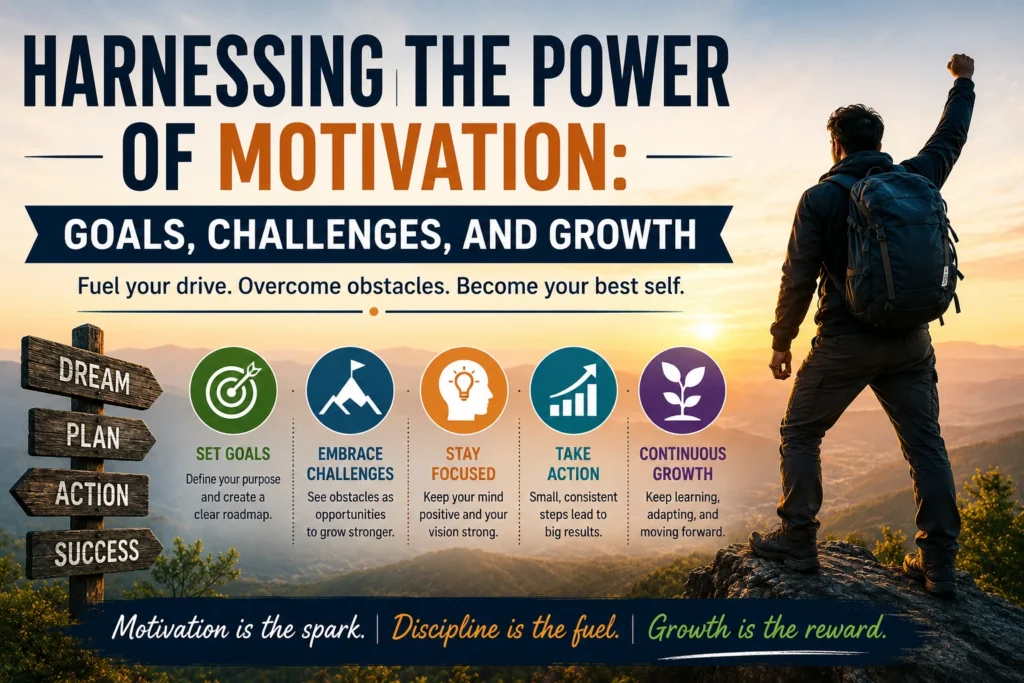
Harnessing the Power of Motivation is one of the most valuable skills you can develop for achieving success in every area of life. Whether you’re striving for better health, career advancement, academic excellence, or stronger relationships, motivation is the force that keeps you moving forward even when challenges arise.
Many people believe motivation is something you either have or don’t. In reality, motivation is a skill that can be cultivated through purposeful habits, meaningful goals, and a positive mindset. The most successful individuals aren’t motivated every single day—they simply know how to build systems that keep them progressing.
In this comprehensive guide, you’ll learn what motivation really is, why it matters, how to stay motivated during difficult times, and practical strategies for building long-term personal growth.
What Is Motivation?
Motivation is the psychological force that drives your actions, decisions, and behaviors. It influences why you begin a task, how much effort you invest, and whether you continue despite setbacks.
Simply put, motivation answers the question:
“Why am I doing this?”
Without motivation, even the most talented people struggle to reach their potential.
Types of Motivation
Intrinsic Motivation
Intrinsic motivation comes from within. You perform an activity because it brings satisfaction, enjoyment, or personal fulfillment.
Examples include:
- Learning a language for fun
- Reading books out of curiosity
- Exercising because it improves your well-being
- Writing as a creative outlet
This type of motivation is often more sustainable because it aligns with your personal values.
Extrinsic Motivation
Extrinsic motivation is fueled by external rewards such as:
- Promotions
- Salary increases
- Awards
- Praise
- Certificates
- Recognition
Both intrinsic and extrinsic motivation have their place, and understanding how they influence your behavior is key to Harnessing the Power of Motivation.
Why Motivation Is Important
Motivation affects every aspect of life.
Benefits include:
- Higher productivity
- Better focus
- Increased confidence
- Greater resilience
- Stronger relationships
- Improved mental health
- Career success
- Lifelong learning
People with strong motivation are more likely to remain committed even when progress is slow.
Set Clear and Meaningful Goals
Goals provide direction for your motivation.
Without clear goals, it’s easy to lose focus.
Instead of saying:
“I want to be healthier.”
Choose something measurable:
“I’ll walk 30 minutes five days each week.”
Specific goals create a roadmap for success.
Use SMART Goals
One of the best methods for Harnessing the Power of Motivation is using SMART goals.
Your goals should be:
- Specific
- Measurable
- Achievable
- Relevant
- Time-bound
For example:
“I will complete one online course within the next eight weeks.”
SMART goals improve clarity and reduce procrastination.
Break Large Goals Into Smaller Steps
Big goals often feel overwhelming.
Instead of focusing on the entire journey, concentrate on today’s next step.
For example:
Goal:
Write a book.
Break it into:
- Create an outline
- Write 500 words daily
- Edit one chapter weekly
- Finish the first draft
- Review and publish
Every completed step increases confidence and reinforces Harnessing the Power of Motivation.
Build Positive Daily Habits
Motivation naturally fluctuates.
Habits provide consistency when motivation fades.
Helpful daily habits include:
- Reading for 20 minutes
- Morning exercise
- Journaling
- Planning your day
- Drinking enough water
- Practicing gratitude
Small daily actions eventually produce extraordinary results.
Create a Routine That Supports Success
Successful people rarely rely on inspiration alone.
Instead, they build routines that reduce decision fatigue.
A healthy daily schedule may include:
Morning:
- Wake up consistently
- Stretch or exercise
- Healthy breakfast
- Review goals
Afternoon:
- Complete priority tasks
- Take regular breaks
- Stay hydrated
Evening:
- Reflect on accomplishments
- Prepare for tomorrow
- Read before sleeping
Consistency strengthens motivation over time.
Overcome Challenges With Resilience
Challenges are unavoidable.
The difference between successful people and everyone else is how they respond.
Instead of asking:
“Why is this happening to me?”
Ask:
“What can I learn from this?”
Every obstacle becomes an opportunity for growth.
Common Motivation Killers
Many factors reduce motivation, including:
- Burnout
- Fear of failure
- Lack of sleep
- Negative thinking
- Poor planning
- Unrealistic expectations
- Comparing yourself to others
Recognizing these obstacles allows you to overcome them more effectively.
Develop a Growth Mindset
People with a growth mindset believe abilities improve through effort and learning.
Rather than saying:
“I can’t do this.”
Try:
“I can’t do this yet.”
This single word changes your perspective and encourages continuous improvement.
Celebrate Small Victories
Don’t wait until you’ve achieved your biggest goal before celebrating.
Recognize progress along the way.
Examples include:
- Completing your first workout week
- Finishing a difficult project
- Reading your first book of the month
- Saving your first emergency fund
- Learning a new skill
Celebrating milestones reinforces positive behavior.
Surround Yourself With Positive Influences
Your environment shapes your motivation.
Spend time with people who:
- Encourage growth
- Inspire success
- Offer constructive advice
- Support your goals
- Celebrate your achievements
Positive relationships help sustain long-term motivation.
Take Care of Your Physical Health
A healthy body supports a motivated mind.
Exercise Regularly
Physical activity improves mood and energy through the release of endorphins.
Eat Nutritious Foods
Balanced meals fuel your brain and improve concentration.
Sleep Well
Aim for 7–9 hours of quality sleep each night.
Stay Hydrated
Proper hydration supports focus, memory, and productivity.
Stop Comparing Yourself to Others
Comparison often destroys motivation.
Remember:
Social media usually highlights successes—not struggles.
Measure your progress against your own past performance instead of someone else’s achievements.
Practice Self-Compassion
Everyone experiences setbacks.
Instead of criticizing yourself:
- Accept mistakes
- Learn from them
- Adjust your strategy
- Continue moving forward
Being kind to yourself builds emotional resilience.
Daily Motivation Habits
Simple practices that help maintain motivation include:
- Write three daily priorities
- Read inspiring books
- Listen to educational podcasts
- Practice mindfulness
- Keep a gratitude journal
- Exercise consistently
- Review long-term goals weekly
These habits support Harnessing the Power of Motivation even during challenging periods.
Common Myths About Motivation
Myth 1
Successful people are always motivated.
Reality: They rely on habits and discipline.
Myth 2
Motivation appears automatically.
Reality: Action often creates motivation.
Myth 3
Failure means you’re not capable.
Reality: Failure provides valuable feedback.
Myth 4
You must feel motivated before starting.
Reality: Beginning the task usually creates momentum.
Simple Daily Action Plan
Morning
- Exercise
- Review goals
- Eat a healthy breakfast
Afternoon
- Complete one important task
- Stay hydrated
- Take mindful breaks
Evening
- Reflect on achievements
- Plan tomorrow
- Read or journal
Final Thoughts
Harnessing the Power of Motivation is not about waiting for the perfect moment or relying on temporary inspiration. True motivation grows from meaningful goals, consistent habits, resilience, and a willingness to keep learning through every success and setback.
When you focus on progress instead of perfection, celebrate small victories, and build routines that support your ambitions, motivation becomes a lasting part of your daily life rather than a fleeting emotion.
Start with one small action today. Over time, those small actions will become powerful habits, and those habits will lead to extraordinary personal growth, greater confidence, and long-term success.
Frequently Asked Questions (FAQ)
What is motivation?
Motivation is the internal or external drive that inspires people to take action, achieve goals, and overcome obstacles.
Why is motivation important?
Motivation helps improve productivity, confidence, resilience, learning, and long-term success in both personal and professional life.
How can I stay motivated every day?
Create realistic goals, establish routines, celebrate progress, practice gratitude, and focus on consistent habits instead of relying solely on inspiration.
What are SMART goals?
SMART goals are Specific, Measurable, Achievable, Relevant, and Time-bound objectives that improve focus and success.
How do I overcome setbacks?
View setbacks as learning opportunities, adjust your strategy, stay positive, and continue taking small steps toward your goals.
Can motivation be developed?
Yes. Motivation can be strengthened through habit-building, self-discipline, goal setting, and maintaining a positive mindset
What is the difference between intrinsic and extrinsic motivation?
Intrinsic motivation comes from personal enjoyment, while extrinsic motivation comes from rewards such as money, recognition, or achievements.
Is discipline more important than motivation?
Motivation helps you start, but discipline helps you continue when motivation naturally decreases.