
Table of Contents
Understanding pH Balance and Its Importance
The body’s pH balance refers to the level of acidity or alkalinity in your system. It is measured on a scale from 0 to 14, where a pH of 7 is neutral, values below 7 are acidic, and values above 7 are alkaline. While the body naturally regulates the pH of the blood at around 7.4, your daily food choices can influence the body’s acid-base balance in ways that may affect overall health.
Modern lifestyles that include processed foods, excessive sugar, chronic stress, lack of physical activity, and poor sleep can increase the body’s acid load. Over time, these habits may contribute to inflammation and other health concerns. Although the body works hard to maintain a stable blood pH, eating a nutrient-rich diet can support normal body functions and overall wellness.
One of the easiest ways to support a healthy lifestyle is by choosing more plant-based, whole foods. This is where the Health Benefits of Alkaline Foods become especially valuable. Foods such as leafy green vegetables, fruits, nuts, seeds, and legumes are rich in vitamins, minerals, antioxidants, and fiber that nourish the body and support its natural detoxification processes.
An alkaline-focused eating pattern encourages replacing highly processed foods with fresh, nutrient-dense options. These foods help provide essential nutrients that support digestion, hydration, immune function, and steady energy levels. They also contribute to maintaining the body’s natural balance and promoting long-term wellness.
The Health Benefits of Alkaline Foods extend beyond simply supporting pH balance. Regularly including alkaline-forming foods in your diet may help reduce inflammation, improve digestive health, support heart health, and encourage healthier eating habits. Combined with regular exercise, proper hydration, quality sleep, and stress management, an alkaline-rich diet can play an important role in maintaining overall health and well-being..
What Are Alkaline Foods?
Alkaline foods are those that, when metabolized, promote a higher pH level within the body, creating an environment that is conducive to overall health. This concept originates from the understanding of the body’s acid-base balance, where a pH of 7 is considered neutral. Foods with a pH above 7 are classified as alkaline, while those below are acidic. The distinction between alkaline and acidic foods is crucial in understanding how dietary choices can influence our bodily functions and overall well-being.
Characteristics of alkaline foods include their high mineral content, specifically calcium, potassium, and magnesium, which contribute to an alkaline-forming effect after digestion. Common examples of alkaline foods include green leafy vegetables, fruits, nuts, and legumes. In contrast, processed foods, sugars, and meats tend to be acidic, often resulting in an imbalance in the body’s pH levels. Understanding this balance is essential since a predominance of acidic foods can lead to health issues such as inflammation, fatigue, and compromised immune function.
Additionally, the preparation and cooking methods can alter the alkalinity of foods. For instance, steaming vegetables tends to preserve their alkaline properties better than boiling, which may leach away valuable nutrients. Emphasizing the consumption of whole, unprocessed foods maximizes the benefits of an alkaline diet. Incorporating more alkaline foods can enhance vitality, promote detoxification, and support weight management. As individuals make conscious choices in their diets, they contribute not only to achieving a balanced pH but also to fostering improved long-term health outcomes.
Top 10 Alkaline Foods You Should Include in Your Diet
Following an alkaline diet is a powerful way to support your body’s natural detox process and improve overall wellness. Many people don’t realize that the ongoing battle of acidity vs alkalinity in daily food choices can influence digestion, energy levels, inflammation, and long-term health. By adding more alkaline-forming foods into your meals, you can help maintain a healthier pH balance and encourage the body to function at its best.
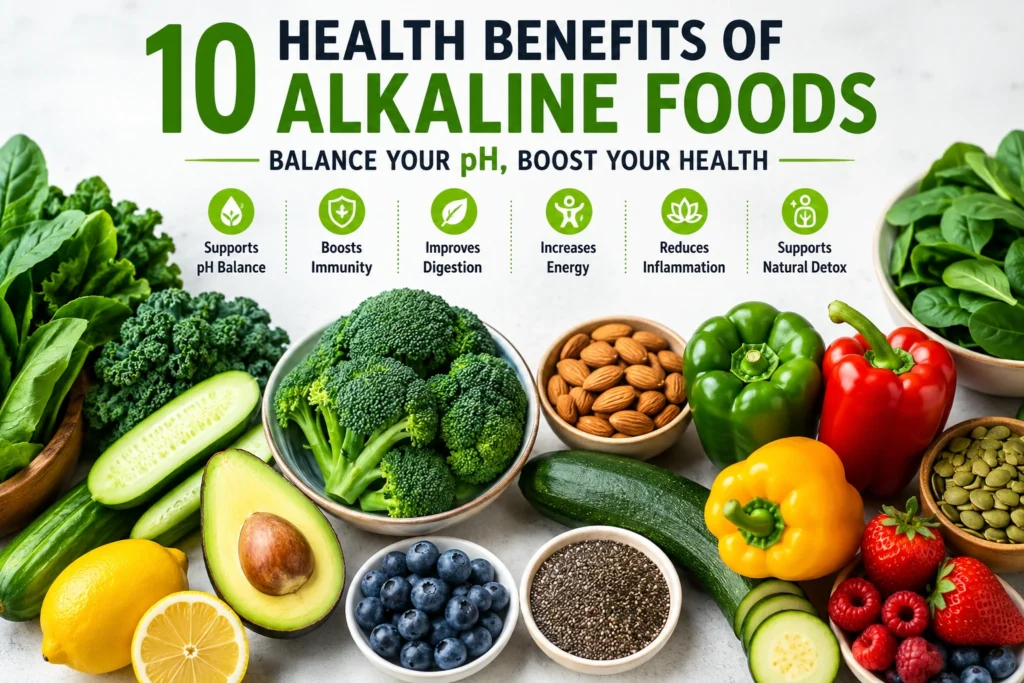
Below are 10 of the best alkaline foods that can help you shift toward a more alkaline lifestyle while enjoying the long-term health benefits of alkaline foods.
1. Leafy Greens
Leafy greens like spinach, kale, arugula, and Swiss chard are among the top foods recommended in an alkaline diet. They are loaded with chlorophyll, minerals, and fiber that support cleansing and digestion. These greens are easy to include in smoothies, salads, soups, or sautéed meals and are excellent for restoring pH balance naturally.
2. Avocados
Avocados are rich in healthy fats and potassium—two important nutrients that help support pH stability. They also provide lasting energy and support heart health. Enjoy them in salads, guacamole, or as a spread for a nourishing alkaline-friendly snack.
3. Cucumbers
Cucumbers are hydrating and alkaline-forming, making them perfect for detox routines. Their high water content helps flush toxins from the body, while their nutrients contribute to better digestion. Add them to salads, detox water, or eat them as a refreshing snack.
4. Bell Peppers
Bell peppers are packed with antioxidants, vitamin C, and plant nutrients that support immunity and cellular health. They are also alkaline-friendly, making them a great choice when focusing on acidity vs alkalinity. Enjoy them raw, roasted, or cooked into meals for added color and nutrition.
5. Broccoli
Broccoli is a nutrient powerhouse and one of the best vegetables for detoxification. It contains fiber, vitamins, and compounds that support liver function. Steamed or lightly roasted broccoli is ideal for anyone aiming to improve pH balance and gain the health benefits of alkaline foods.
6. Cauliflower
Cauliflower is versatile, light, and rich in nutrients while remaining alkaline-forming. It works well as a substitute for rice, mashed potatoes, or even pizza crust, making it easy to stay consistent with an alkaline diet without sacrificing variety.
7. Zucchini
Zucchini is another alkaline vegetable that supports digestion and helps reduce acidity in the body. It’s low in calories and easy to cook—try it grilled, roasted, or spiralized into “zoodles” as a healthy alternative to pasta.
8. Berries
Berries such as blueberries, strawberries, and raspberries are rich in antioxidants and are considered alkaline-friendly in moderate amounts. They help fight oxidative stress, support immunity, and contribute to better pH balance. Add berries to smoothies, breakfast bowls, or healthy desserts.
9. Lemons
Although lemons taste acidic, they have an alkalizing effect once metabolized. This makes them a popular choice in alkaline diet plans, especially in detox drinks. Start your morning with warm lemon water to support digestion and promote a more balanced pH.
10. Nuts and Seeds
Almonds, chia seeds, flaxseeds, and pumpkin seeds are excellent sources of protein, minerals, and healthy fats. Unlike many processed snacks that increase acidity, nuts and seeds support alkalinity and provide long-lasting energy. They’re easy to add to smoothies, salads, or snack mixes.
Why These Foods Matter for an Alkaline Diet
Adding these foods regularly can help reduce the effects of overly acidic eating patterns and promote a healthier internal environment. When you understand acidity vs alkalinity, you can make smarter food choices that support digestion, energy, and immune strength. These alkaline foods provide vitamins, minerals, hydration, and antioxidants—key reasons behind the strong health benefits of alkaline foods.
Practical Tips for Transitioning to an Alkaline Diet
Switching to an alkaline diet doesn’t have to be overwhelming. With simple planning and consistent habits, you can gradually improve your pH balance and feel the difference.
1. Plan Your Meals Weekly
Start with a weekly meal plan that focuses on alkaline-forming foods like vegetables, fruits, nuts, and seeds. Planning helps you avoid last-minute unhealthy options and makes it easier to stay consistent.
2. Shop Smart and Stay Fresh
When grocery shopping, build your list around fresh produce. Shopping the perimeter of the store helps you focus on whole foods and avoid packaged items that increase acidity. Organic choices can also be beneficial since they reduce exposure to additives and chemicals.
3. Try Simple Alkaline Recipes
Easy meals can keep you motivated. Some beginner-friendly options include:
- Green smoothies with spinach or kale
- Fresh salads with avocado, cucumber, and seeds
- Stir-fried vegetables with zucchini, broccoli, and peppers
These meals help support pH balance while delivering essential nutrients.
4. Handle Cravings the Healthy Way
It’s normal to crave acidic foods (sugary snacks, fried items, processed meals) during the early stages. Instead of giving up, replace them with healthier alkaline options like berries, nuts, herbal teas, or veggie snacks.
5. Stay Motivated with the Health Benefits
Many people follow an alkaline diet because they experience benefits like improved digestion, reduced bloating, better energy levels, and clearer thinking. Keeping these results in mind can help you stay committed to the lifestyle change.
6. Keep Learning
Educate yourself through trusted books, nutritionists, and reputable health websites. Understanding food labels and nutrition facts can help you make better choices and maintain long-term success in balancing acidity vs alkalinity.

What are alkaline foods?
Alkaline foods are foods that help promote a more alkaline environment in the body after digestion. They mainly include vegetables, fruits, nuts, seeds, and legumes.
What are the health benefits of alkaline foods?
The health benefits of alkaline foods include better digestion, improved hydration, reduced inflammation, increased energy levels, support for natural detoxification, and overall wellness.
Which foods are the most alkaline?
Some of the best alkaline foods include spinach, kale, cucumbers, broccoli, avocados, zucchini, lemons, bell peppers, berries, almonds, and chia seeds.
Can an alkaline diet improve pH balance?
An alkaline diet can support the body’s natural acid-base balance by encouraging the consumption of nutrient-rich, plant-based foods. However, the body tightly regulates blood pH on its own.
Are lemons acidic or alkaline?
Lemons are acidic in taste, but after they are metabolized, they have an alkalizing effect and are commonly included in alkaline diet plans.
.Can alkaline foods help with weight loss?
Alkaline foods may support healthy weight management because they are generally rich in fiber, vitamins, and minerals while being lower in calories than many processed foods.
How can I start an alkaline diet?
Begin by eating more fresh vegetables, fruits, nuts, seeds, and legumes while reducing processed foods, sugary drinks, and highly refined foods. Meal planning can make the transition easier.
Is an alkaline diet safe for everyone?
For most healthy individuals, an alkaline diet based on whole plant foods is safe and nutritious. If you have a medical condition or dietary restrictions, consult a healthcare professional before making major dietary changes.