Table of Contents
Introduction: Healthy Eating Doesn’t Have to Be Expensive
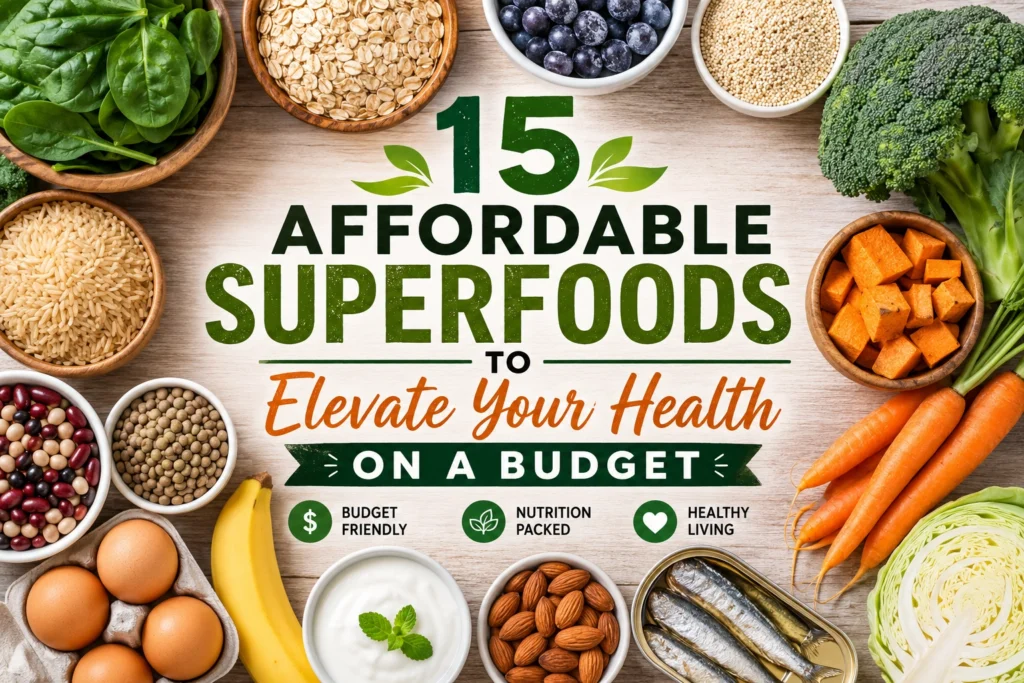
Budget-Friendly Superfoods make it possible to eat healthy without spending a fortune. Nutritious eating isn’t reserved for people with large grocery budgets—many vitamin- and mineral-rich foods are inexpensive, easy to find, and incredibly versatile. By choosing Budget-Friendly Superfoods, you can fuel your body with protein, fiber, healthy fats, and essential nutrients while keeping your grocery bill under control.
Many people assume healthy eating requires expensive organic products or trendy “superfoods.” In reality, everyday foods like oats, beans, eggs, spinach, and sweet potatoes provide exceptional nutrition at a fraction of the cost.
In this guide, you’ll discover 15 Budget-Friendly Superfoods that can improve your health, boost your energy, support your wellness goals, and help you eat well without breaking the bank.
Why Budget-Friendly Superfoods Matter
Budget-Friendly Superfoods are nutrient-dense foods that offer exceptional health benefits while remaining affordable. Choosing these foods allows you to:
- Save money on groceries
- Improve overall nutrition
- Support heart health
- Maintain a healthy weight
- Boost immunity
- Increase energy levels
- Improve digestion
- Reduce the risk of chronic diseases
Healthy eating becomes much easier when you build your meals around Budget-Friendly Superfoods that are both practical and nutritious.
Top 15 Affordable Superfoods
1. Brown Rice
Brown rice is an inexpensive whole grain packed with fiber, B vitamins, and minerals.
Benefits
- Provides long-lasting energy
- Supports digestive health
- Keeps you feeling full longer
- Helps regulate blood sugar
Best uses: Stir-fries, grain bowls, soups, and side dishes.
2. Quinoa
Although slightly more expensive than rice, quinoa is highly nutritious and lasts for many meals.
Benefits
- Complete plant protein
- Rich in magnesium
- Naturally gluten-free
- High in fiber
Best uses: Salads, breakfast bowls, and side dishes.
3. Spinach
Spinach delivers incredible nutrition for very little cost.
Benefits
- High in iron
- Rich in Vitamin A
- Excellent source of Vitamin K
- Contains powerful antioxidants
Best uses: Smoothies, omelets, soups, pasta, and salads.
4. Canned Beans
Beans are among the most affordable sources of plant protein.
Benefits
- High in fiber
- Rich in protein
- Supports heart health
- Helps maintain stable blood sugar
Popular choices include:
- Black beans
- Kidney beans
- Pinto beans
- Chickpeas
5. Sweet Potatoes
Sweet potatoes are filling, affordable, and naturally sweet.
Benefits
- High in Vitamin A
- Rich in potassium
- Good source of fiber
- Supports eye health
Bake, roast, or mash them for nutritious meals.
6. Carrots
Carrots are available year-round at very low prices.
Benefits
- Excellent source of beta-carotene
- Supports eye health
- Low in calories
- High in antioxidants
Perfect for snacks, soups, and roasting.
7. Oats
Oats remain one of the healthiest breakfast choices available.
Benefits
- High in soluble fiber
- Supports heart health
- Helps lower cholesterol
- Keeps you full for hours
Enjoy oats as:
- Oatmeal
- Overnight oats
- Smoothies
- Homemade granola
8. Frozen Berries
Frozen berries are often cheaper than fresh while retaining most nutrients.
Benefits
- Rich in antioxidants
- High in Vitamin C
- Supports healthy skin
- Helps reduce inflammation
Great for smoothies, yogurt, and oatmeal.
9. Eggs
Eggs provide outstanding nutrition at an affordable price.
Benefits
- Complete protein
- Rich in choline
- Supports brain health
- Highly satisfying
They can be enjoyed boiled, scrambled, poached, or baked.
10. Cabbage
Cabbage is one of the most economical vegetables available.
Benefits
- Rich in Vitamin C
- Supports digestion
- High in antioxidants
- Very low in calories
Use it in:
- Salads
- Stir-fries
- Soups
- Slaws
11. Lentils
Lentils are among the best budget-friendly protein sources.
Benefits
- High in protein
- Excellent fiber source
- Rich in iron
- Supports heart health
Lentils cook quickly and work well in soups, curries, and salads.
12. Greek Yogurt
Greek yogurt is packed with nutrients and beneficial probiotics.
Benefits
- High in protein
- Supports gut health
- Rich in calcium
- Helps maintain muscle mass
Choose plain varieties to reduce added sugar.
13. Bananas
Bananas are affordable, portable, and naturally sweet.
Benefits
- Rich in potassium
- Provides quick energy
- Supports heart health
- Contains Vitamin B6
Perfect for snacks or smoothies.
14. Sardines
Canned sardines are inexpensive yet incredibly nutritious.
Benefits
- Rich in Omega-3 fats
- High in protein
- Excellent calcium source
- Supports heart and brain health
Pair with whole-grain toast or salads.
15. Broccoli
Broccoli offers exceptional nutrition for a modest price.
Benefits
- High in Vitamin C
- Rich in fiber
- Contains antioxidants
- Supports immune health
Steam, roast, or stir-fry for easy meals.
Smart Shopping Tips for Healthy Eating on a Budget
Saving money while eating nutritious foods is easier with smart planning.
Buy Seasonal Produce
Seasonal fruits and vegetables are fresher and more affordable.
Purchase Frozen Vegetables
Frozen produce lasts longer and often costs less than fresh.
Buy in Bulk
Stock up on:
- Oats
- Rice
- Lentils
- Beans
Buying larger quantities usually lowers the price per serving.
Choose Store Brands
Generic products often have the same nutritional value as premium brands.
Plan Weekly Meals
Meal planning helps reduce food waste and unnecessary purchases.
Cook at Home
Preparing meals yourself is healthier and far less expensive than eating out.
Sample Budget-Friendly Meal Plan
Breakfast
- Oatmeal with banana and peanut butter
Morning Snack
- Greek yogurt with frozen berries
Lunch
- Brown rice with black beans and steamed broccoli
Afternoon Snack
- Carrot sticks and hummus
Dinner
- Baked sweet potato with spinach and grilled eggs
This simple menu delivers protein, fiber, vitamins, and healthy carbohydrates without exceeding a modest grocery budget.
Benefits of Eating Affordable Superfoods
Including these nutrient-rich foods regularly can help:
- Improve digestion
- Support heart health
- Strengthen immunity
- Increase daily energy
- Build lean muscle
- Improve brain function
- Promote healthy skin
- Support healthy weight management
- Reduce inflammation
- Lower long-term healthcare costs
Small dietary improvements made consistently often produce significant health benefits over time.
Common Mistakes to Avoid
Avoid these common pitfalls when trying to eat healthy on a budget:
- Buying processed “health foods”
- Shopping without a grocery list
- Throwing away leftovers
- Ignoring frozen fruits and vegetables
- Choosing sugary flavored yogurt
- Purchasing expensive superfood powders unnecessarily
Simple whole foods usually provide the greatest nutritional value.
Final Thoughts
Eating well doesn’t require expensive ingredients or specialty products. Budget-Friendly Superfoods like oats, beans, spinach, eggs, lentils, broccoli, and sweet potatoes provide outstanding nutrition at an affordable price. With thoughtful meal planning, smart shopping habits, and a focus on whole foods, you can nourish your body, improve your health, and stay within your grocery budget.
Remember, healthy eating is about consistency—not perfection. Start by adding a few Budget-Friendly Superfoods to your weekly shopping list, and you’ll soon discover that nutritious living can be both simple and affordable.
Frequently Asked Questions (FAQ)
What are affordable superfoods?
Affordable superfoods are inexpensive, nutrient-dense foods such as oats, beans, spinach, eggs, lentils, and sweet potatoes that provide excellent health benefits.
Can I eat healthy on a tight budget?
Yes. Planning meals, buying seasonal produce, purchasing in bulk, and cooking at home make healthy eating affordable.
Which superfood offers the most protein?
Lentils, beans, Greek yogurt, eggs, quinoa, and sardines are excellent protein-rich superfoods.
Are frozen vegetables as healthy as fresh ones?
Yes. Frozen vegetables are typically frozen shortly after harvest, preserving most of their nutrients.
Which affordable superfoods are best for weight loss?
Oats, lentils, beans, broccoli, spinach, Greek yogurt, and eggs are filling foods that support healthy weight management.
What is the cheapest source of healthy protein?
Beans, lentils, eggs, and canned sardines are among the most affordable high-protein foods.
Can affordable superfoods improve heart health?
Yes. Foods like oats, broccoli, spinach, beans, sardines, and olive oil support healthy cholesterol levels and cardiovascular health.
How often should I eat superfoods?
Aim to include several nutrient-rich whole foods in your meals every day as part of a balanced diet.