Table of Contents
Introduction: Eat Your Way to Stronger, Healthier Joints
Anti-Inflammatory Foods for Joint Health can make a remarkable difference in how your body feels every day. While occasional inflammation is part of your body’s natural healing process, long-term inflammation can contribute to joint pain, stiffness, arthritis, and reduced mobility.
Fortunately, your daily food choices can help lower inflammation naturally. Many fruits, vegetables, healthy fats, whole grains, herbs, and lean proteins contain powerful nutrients that help calm inflammation while supporting stronger bones, cartilage, and muscles.
In this guide, you’ll discover the best anti-inflammatory foods, learn why they work, and explore simple lifestyle habits that can improve joint health for years to come.
Understanding Inflammation and Joint Health
Inflammation is your immune system’s natural defense against infections, injuries, and harmful substances. During short-term (acute) inflammation, your body sends white blood cells and nutrients to repair damaged tissues.
However, problems begin when inflammation becomes chronic.
Chronic inflammation may continue silently for months or years, damaging healthy tissues instead of protecting them. Over time, it may contribute to:
- Osteoarthritis
- Rheumatoid arthritis
- Joint stiffness
- Muscle soreness
- Heart disease
- Type 2 diabetes
- Obesity
For your joints, chronic inflammation gradually wears down cartilage, weakens connective tissues, and increases pain during movement.
The good news is that combining healthy eating with regular exercise and proper sleep can significantly reduce inflammation naturally.
Common Causes of Chronic Inflammation
Several lifestyle habits may increase inflammation, including:
- Highly processed foods
- Sugary drinks
- Excess refined carbohydrates
- Smoking
- Lack of exercise
- Poor sleep
- Chronic stress
- Excess alcohol
- Obesity
Replacing inflammatory foods with nutrient-rich whole foods helps restore balance inside the body.
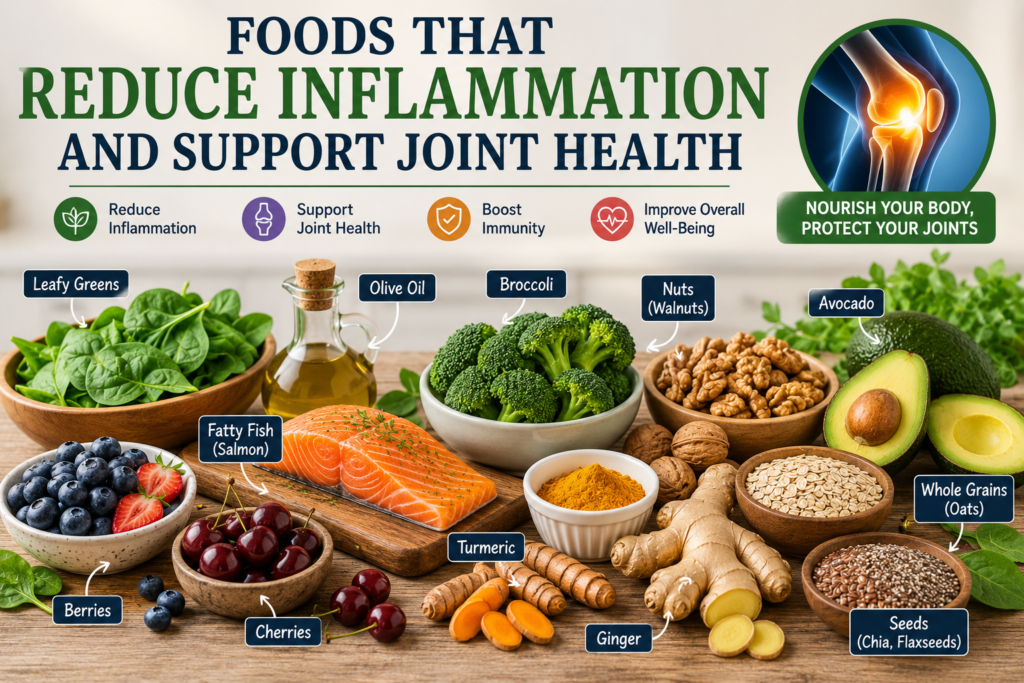
Top 10 Anti-Inflammatory Foods for Joint Health
1. Fatty Fish
Salmon, sardines, tuna, trout, and mackerel are rich in Omega-3 fatty acids.
Benefits
- Reduces inflammation
- Lubricates joints
- Supports heart health
- May decrease arthritis symptoms
Aim for two servings each week.
2. Leafy Green Vegetables
Spinach, kale, Swiss chard, and collard greens provide vitamins A, C, K, and antioxidants.
Benefits
- Protect cartilage
- Reduce oxidative stress
- Improve bone strength
- Support healthy joints
Try adding greens to salads, soups, smoothies, or omelets.
3. Blueberries
Blueberries contain anthocyanins—powerful antioxidants known for fighting inflammation.
Benefits
- Protect cells
- Improve recovery
- Reduce muscle soreness
- Support immune function
Fresh or frozen blueberries are equally nutritious.
4. Cherries
Tart cherries are especially popular among athletes for reducing soreness.
Benefits
- Lower inflammatory markers
- Improve exercise recovery
- Support joint mobility
They also provide Vitamin C and potassium.
5. Broccoli
Broccoli contains sulforaphane, a plant compound linked to lower inflammation.
Benefits
- Supports cartilage health
- Rich in fiber
- High in Vitamin C
- Promotes healthy aging
Steaming broccoli preserves many of its nutrients.
6. Olive Oil
Extra virgin olive oil is one of the healthiest fats available.
Its natural compound, oleocanthal, works similarly to anti-inflammatory medications by helping reduce inflammatory activity.
Benefits
- Supports heart health
- Reduces joint pain
- Rich in healthy fats
- Protects blood vessels
Use it for cooking, salads, or roasted vegetables.
7. Nuts and Seeds
Walnuts, almonds, flaxseeds, chia seeds, and pumpkin seeds offer healthy fats, magnesium, and antioxidants.
Benefits
- Improve joint flexibility
- Reduce inflammation
- Support bone health
- Provide plant protein
A small handful daily is enough.
8. Turmeric
Turmeric contains curcumin, one of nature’s most studied anti-inflammatory compounds.
Benefits
- Helps reduce swelling
- Supports arthritis management
- Powerful antioxidant
Pair turmeric with black pepper to improve absorption.
9. Ginger
Fresh ginger has been used for centuries to relieve pain and inflammation.
Benefits
- Reduces joint stiffness
- Supports digestion
- May relieve arthritis discomfort
Add fresh ginger to tea, smoothies, soups, or stir-fries.
10. Whole Grains
Choose:
- Brown rice
- Oats
- Quinoa
- Barley
Whole grains provide fiber that supports healthy gut bacteria, which can help regulate inflammation throughout the body.
Benefits
- Better digestion
- Stable blood sugar
- Reduced inflammation
- Long-lasting energy
Foods That May Increase Inflammation
Limiting certain foods may be just as important as eating healthy ones.
Try reducing:
- Sugary drinks
- Candy
- White bread
- Fried foods
- Processed meats
- Packaged snacks
- Excess alcohol
- Refined vegetable oils
These foods may increase inflammatory markers and worsen joint discomfort over time.
Lifestyle Habits That Support Healthy Joints
Nutrition works best when combined with healthy daily habits.
Stay Active
Low-impact exercises include:
- Walking
- Swimming
- Cycling
- Yoga
- Stretching
Aim for at least 150 minutes of moderate exercise per week.
Maintain a Healthy Weight
Every extra pound places additional pressure on your knees, hips, and ankles.
Even modest weight loss can improve joint comfort.
Drink Plenty of Water
Hydration keeps joints lubricated and supports nutrient delivery throughout the body.
Aim for 8–10 glasses of water daily.
Manage Stress
Long-term stress raises inflammation levels.
Helpful techniques include:
- Meditation
- Deep breathing
- Reading
- Nature walks
- Journaling
Prioritize Sleep
Adults should aim for 7–9 hours of quality sleep each night to support tissue repair and immune function.
Practical Tips for Adding Anti-Inflammatory Foods
Making small daily changes is often easier than following restrictive diets.
Try these ideas:
- Add berries to oatmeal.
- Cook vegetables in olive oil.
- Replace chips with mixed nuts.
- Enjoy salmon twice a week.
- Drink green tea instead of sugary beverages.
- Add turmeric and ginger to soups and curries.
- Include leafy greens in smoothies.
- Choose whole grains instead of refined grains.
Consistency matters more than perfection.
Sample One-Day Anti-Inflammatory Meal Plan
Breakfast
Oatmeal topped with blueberries, walnuts, and chia seeds
Morning Snack
Greek yogurt with fresh cherries
Lunch
Grilled salmon with quinoa and steamed broccoli
Afternoon Snack
Apple slices with almond butter
Dinner
Grilled chicken, roasted sweet potatoes, spinach salad with olive oil dressing
Evening Drink
Warm turmeric ginger tea
This balanced menu provides fiber, antioxidants, healthy fats, lean protein, and vitamins that help reduce inflammation naturally.
Final Thoughts
Healthy joints begin with healthy habits. Eating more Anti-Inflammatory Foods for Joint Health is a simple yet effective way to reduce chronic inflammation, support mobility, and improve overall well-being.
Instead of relying solely on medications, focus on building a lifestyle that includes colorful fruits, leafy greens, healthy fats, whole grains, lean proteins, regular exercise, proper hydration, stress management, and quality sleep.
Small changes made consistently can have a lasting impact on your joint health and quality of life.
Frequently Asked Questions (FAQ)
What are the best anti-inflammatory foods for joint health?
Some of the best choices include salmon, sardines, blueberries, cherries, spinach, kale, broccoli, turmeric, ginger, olive oil, walnuts, chia seeds, and whole grains.
Can diet really reduce joint inflammation?
Yes. A balanced diet rich in antioxidants, omega-3 fatty acids, fiber, and healthy fats may help lower chronic inflammation and support healthier joints.
Which foods should I avoid if I have joint pain?
Limit sugary drinks, processed foods, fried foods, refined carbohydrates, processed meats, and excessive alcohol, as they may increase inflammation.
Is turmeric good for arthritis?
Turmeric contains curcumin, a natural compound that may help reduce inflammation and ease arthritis symptoms when consumed regularly.
How often should I eat fatty fish?
Most health experts recommend eating fatty fish at least two times per week for optimal omega-3 intake.
Are fruits good for reducing inflammation?
Yes. Berries, cherries, oranges, grapes, and pomegranates are rich in antioxidants that help protect cells and reduce inflammation.
Can losing weight improve joint health?
Yes. Maintaining a healthy weight reduces pressure on weight-bearing joints and can help decrease pain and improve mobility.
Does drinking more water help joints?
Proper hydration supports joint lubrication and helps maintain healthy cartilage and connective tissues.
Are nuts good for inflammation?
Yes. Walnuts, almonds, flaxseeds, and chia seeds provide healthy fats and antioxidants that support joint health.
Can exercise reduce inflammation?
Regular moderate exercise improves circulation, strengthens muscles around the joints, reduces stiffness, and helps lower chronic inflammation.